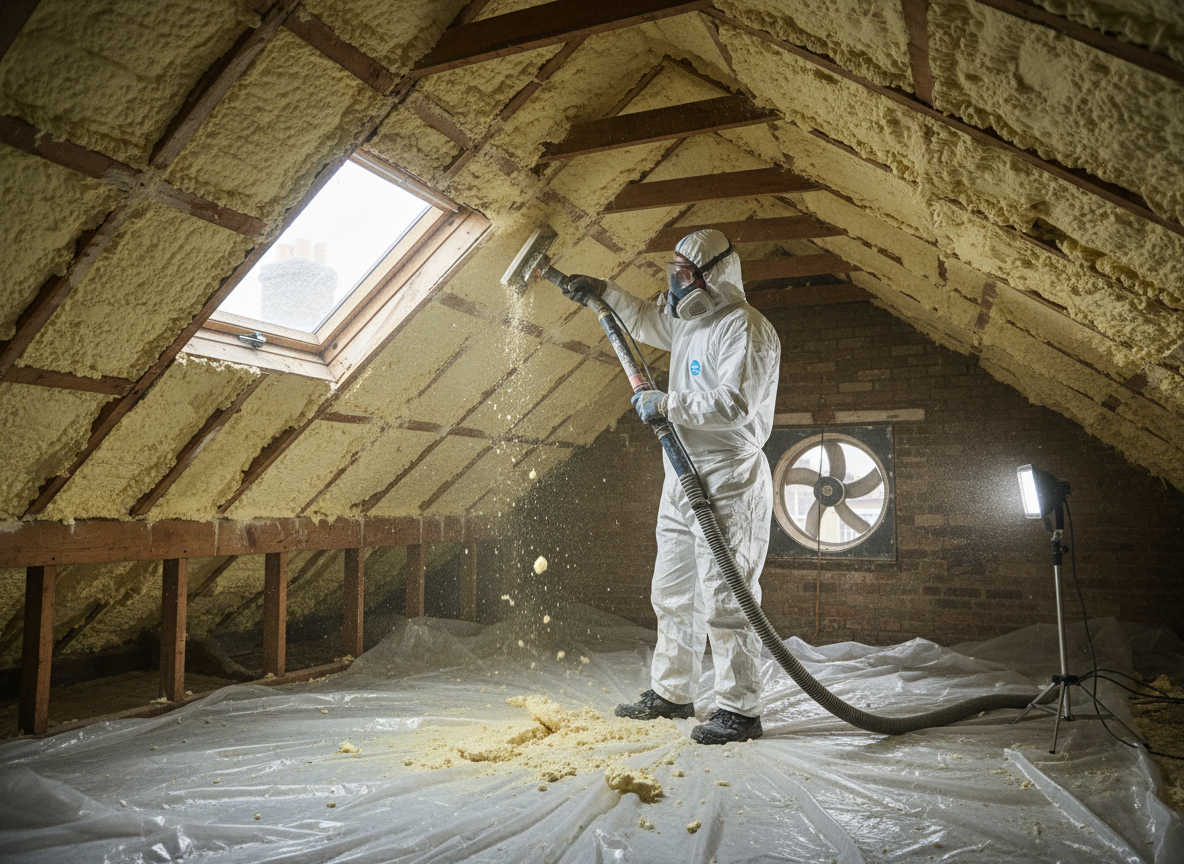
Highams Park homes built between the 1890s and 1930s line streets such as The Avenue and Larkshall Road. Many of these terraces and semis received spray foam in the loft during later energy upgrades, trapping moisture against original rafters and causing rot. Pureguard Solution crews based at 139 George Lane reach the area in under fifteen minutes and use contained extraction rigs that fit through standard loft hatches without cutting ceilings.
Winter damp from the nearby Highams Park Lake and the River Ching raises humidity levels inside roof voids, softening foam and making it stick harder to timber. Summer heat can bake the material brittle. Our teams work through both seasons, ventilating voids immediately after removal and checking for hidden water ingress common on north-facing pitches along Chingford Lane.
Access is often limited to narrow side returns and shared drives off Winchester Road. Equipment is carried in by hand to avoid blocking the Highams Park station approach or school run traffic on Hale End Road.
Around Highams Park
We regularly work near:
- 📍Highams Park Lake
- 📍The Highams Park School
- 📍Highams Park Station
- 📍Larkshall Road
- 📍The Avenue
- 📍Winchester Road
Spray Foam Removal in Highams Park — Local Notes
- •Edwardian and interwar terraces around Highams Park Lake frequently have narrow, low-pitched lofts where spray foam was applied directly to rafters, requiring sectional removal to protect original timbers.
- •Higher ground-water influence near the lake and Chingford Lane means extra checks for damp staining on ceiling joists once foam is cleared.
- •On-street parking restrictions near The Highams Park School and station mean crews schedule early starts or use permit bays to keep vans off Larkshall Road during peak hours.
- •South-facing roofs along The Avenue suffer more UV degradation of foam, turning it crumbly and easier to vacuum but leaving fine residue that must be fully extracted before new insulation.