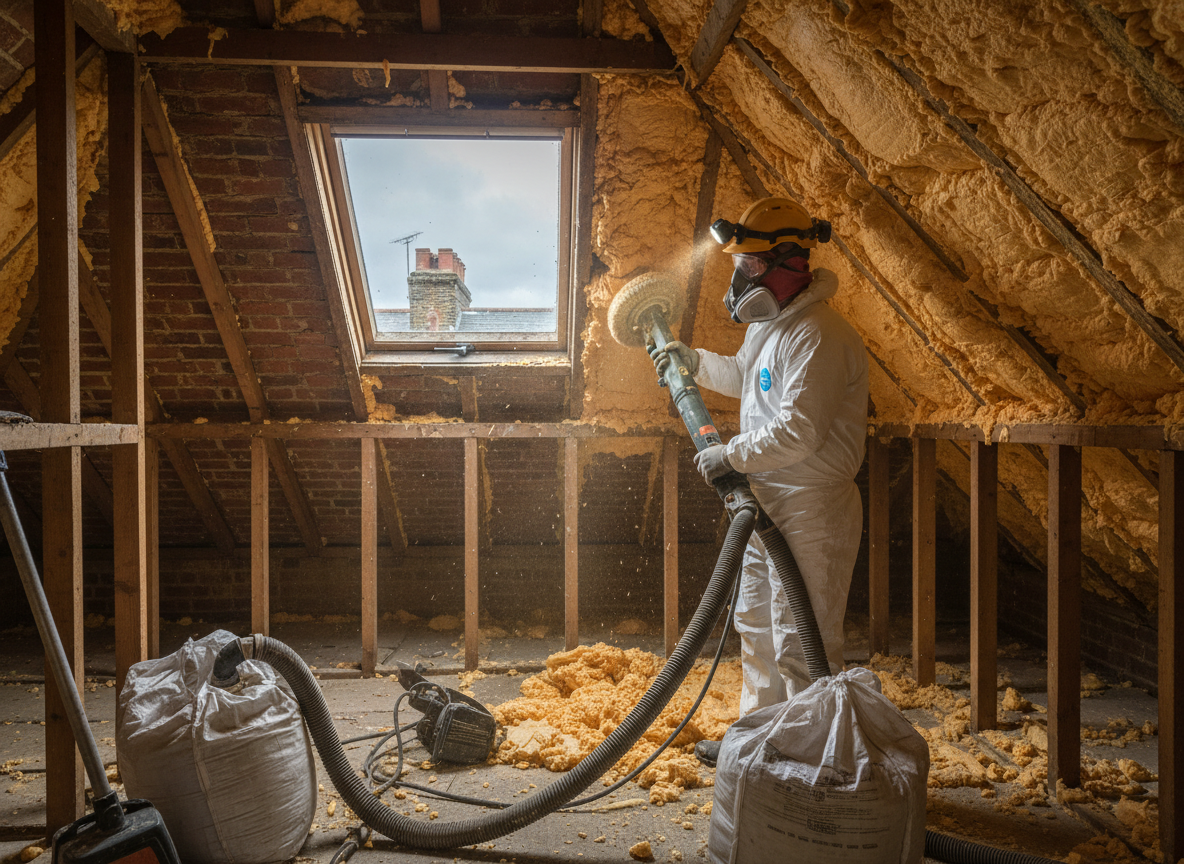
London's Victorian terraces in areas like Islington and Hackney often have spray foam applied directly to rafters and brickwork in the 2000s. Over time this traps moisture from the city's frequent rain, leading to rot in timber and masonry. Removal requires careful cutting and scraping to avoid damaging original lath and plaster ceilings below while containing dust in tight roof voids.
Post-war estates in Southwark and Tower Hamlets present different challenges with foam injected into cavity walls. The foam bonds tightly to concrete and steel lintels, and extraction must account for the capital's high water table that keeps ground-level walls damp. Technicians use negative air machines to prevent fibres drifting into living spaces during the multi-day process.
Edge cases include listed buildings where foam was added without proper ventilation, creating condensation issues that breach building regulations. In these homes removal involves documenting existing substrate condition before work starts and leaving surfaces clean for inspection by conservation officers.
Weather patterns matter: prolonged wet spells common from October to March soften foam but increase slip hazards on pitched roofs in neighbourhoods such as Camden and Greenwich. Crews schedule external access around these conditions to keep debris from washing into gutters and downpipes.
Technician insight
In London, the thing that catches most people out with Residential Spray Foam Removal is how Victorian brickwork in terraces like those in Hackney holds moisture behind the foam for years. Once disturbed, that trapped damp can migrate into party walls if extraction skips proper drying time.
Foam removal from a Hackney loft
Homeowner noticed ceiling staining after heavy autumn rain. Inspection found closed-cell foam blocking original roof ventilation in the 1890s terrace. Crew removed the foam in sections over two days, installed temporary vents and left the rafters clean for the owner's builder to assess.
How it works
- 1
Site Inspection
Assess foam depth, substrate condition and access points in the specific London property.
- 2
Containment Setup
Install dust barriers and negative air filtration to protect the rest of the home.
- 3
Foam Extraction
Mechanically remove material layer by layer without damaging historic timbers or brick.
- 4
Cleanup and Verification
Vacuum residues and confirm surfaces are clear before handing back the space.
Pricing
Pricing depends on access difficulty, foam thickness and property age; quotes provided after inspection.