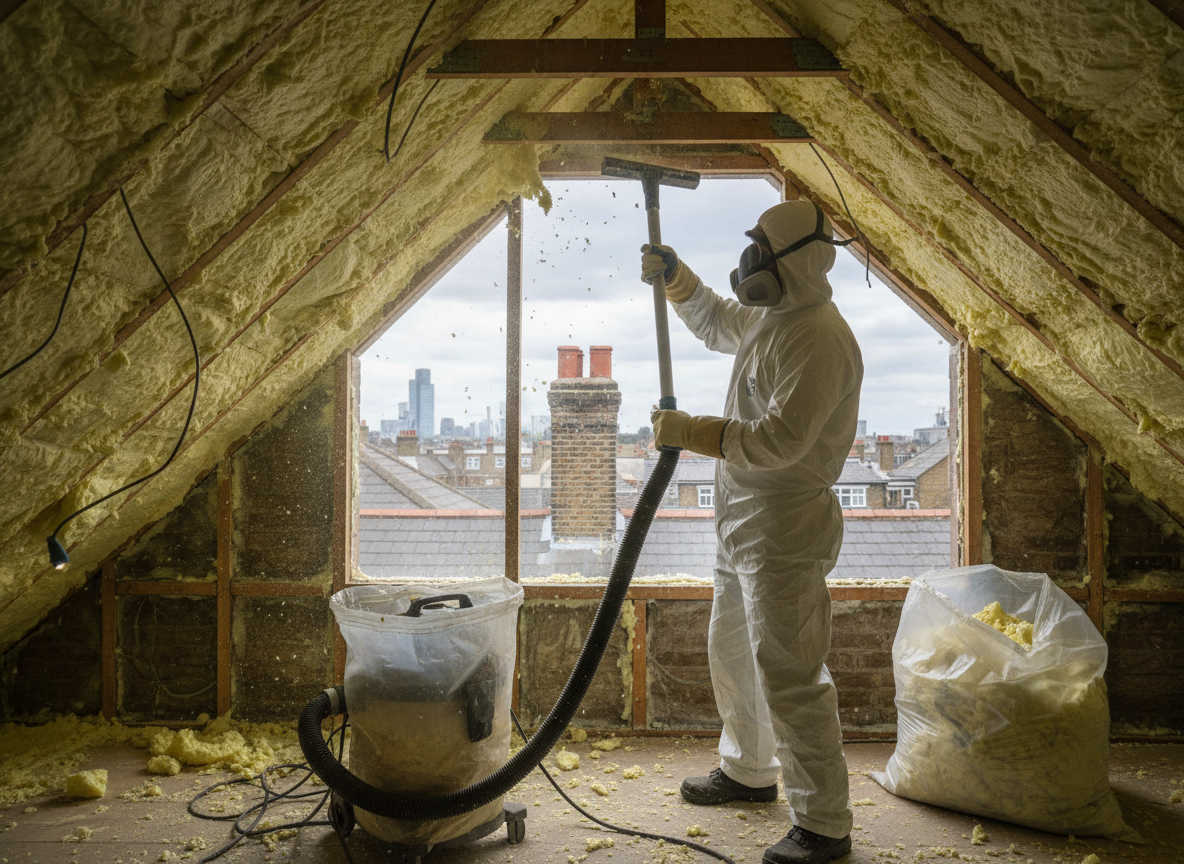
London's Victorian and Edwardian terraces in neighbourhoods like South Woodford and Leytonstone often have spray foam installed in roof voids during the 2000s energy grants. Over time the foam traps moisture against original timber and lath, leading to rot and poor ventilation that only becomes obvious during heavy autumn rainfall. Same day removal requires cutting access points without disturbing fragile ceilings below while containing loose particles that can drift into living spaces.
The capital's frequent damp weather means foam is frequently waterlogged by the time homeowners notice musty smells or rising energy bills. Technicians must work around shared chimney stacks and party walls common in E18 terraces, taking care not to breach fire separation. Quick extraction also prevents the foam from breaking down further and releasing particles into the loft space during the job.
Disposal follows Environment Agency rules for waste insulation, with material bagged on site and removed the same day to avoid overnight storage in residential streets. Older properties around George Lane frequently have narrow loft hatches and low headroom, so equipment must be carried up ladders rather than through larger modern openings.
Handling Shared Roof Spaces
In terraced streets the foam often extends across multiple properties. A same day job includes checking the neighbouring void to prevent cross-contamination and resealing any shared penetrations before leaving site.
Technician insight
In London, the thing that catches most people out with same day Spray Foam Removal is how the wet winters around Wanstead and South Woodford leave the foam saturated and stuck to original lath and plaster in Edwardian lofts. Narrow hatches and shared chimney breasts mean we often have to work in tight spaces where one wrong cut can drop debris straight into a bedroom below.
E18 Terrace Loft Clearance
Homeowner in George Lane reported musty smells after recent rain. Inspection showed waterlogged foam bridging joists and touching the ceiling. Material was cut out section by section, bagged and removed the same afternoon, restoring airflow without damage to the original plasterwork.
How it works
- 1
Initial Assessment
Arrive at the London property, inspect the loft and note access points, moisture levels and any shared walls.
- 2
Site Protection
Lay floor protection and seal doorways to stop dust travelling into living areas below.
- 3
Foam Extraction
Cut and bag the foam in sections, working around joists and original timbers without damaging the structure.
- 4
Clearance and Disposal
Remove all waste the same day and leave the loft space ready for inspection or new insulation.
Pricing
Pricing depends on loft size, foam depth and access difficulty typical of London terraces.