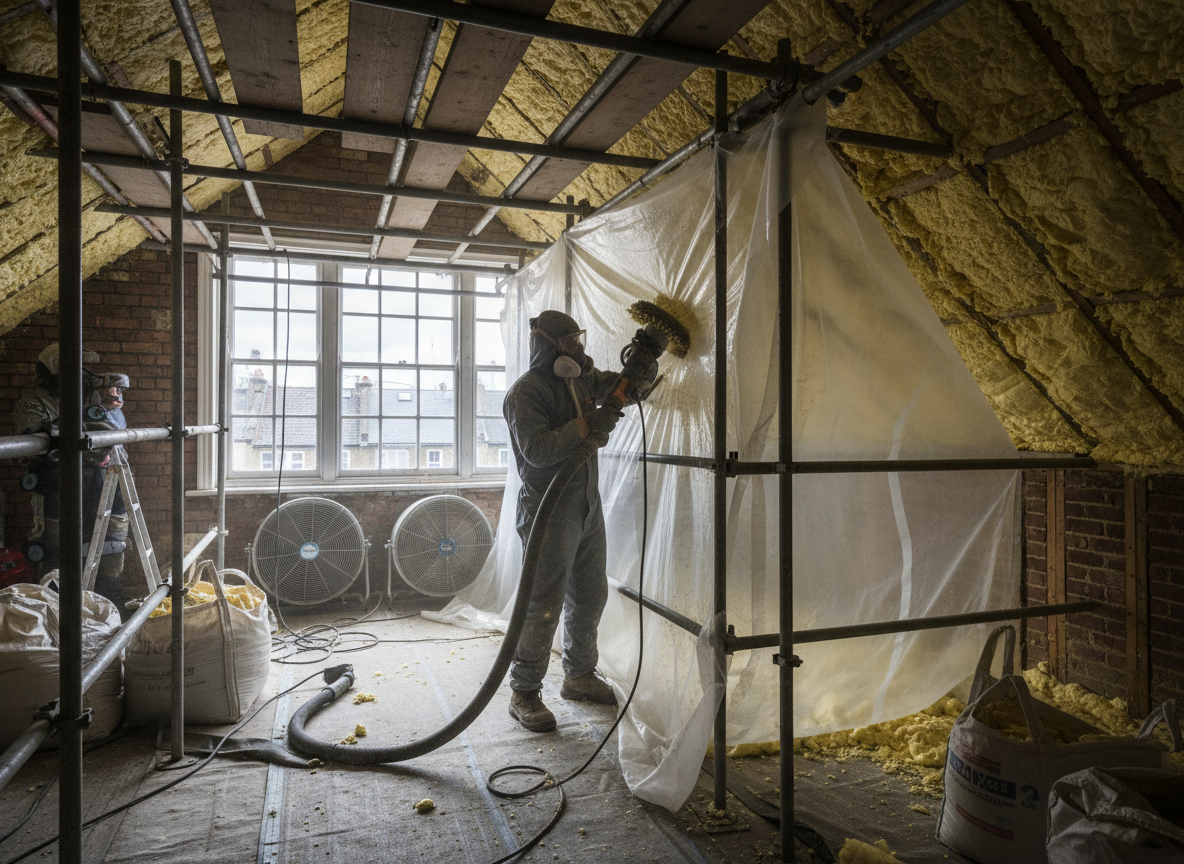
Spray foam installed in London lofts often blocks the eaves and ridge ventilation that older terraces rely on. In areas such as South Woodford and Wanstead, many 1890-1930s houses have narrow roof voids where closed-cell foam adheres directly to rafters and felt. Removing it requires cutting back without damaging original timbers, then clearing residue so airflow can resume and reduce the risk of condensation that the foam itself can hide.
Greater London weather brings frequent driving rain and high humidity, especially through autumn and winter. This moisture can migrate behind foam layers on north-facing roofs and party walls, leading to timber decay that only becomes visible once the foam is stripped. Proper removal includes checking for rot, documenting any affected sections, and leaving the roof ready for breathable insulation or other upgrades that meet current building standards.
Disposal of removed foam must follow local waste rules because some older formulations contain blowing agents now restricted. Crews bag material on site, separate contaminated timber if needed, and arrange licensed haulage from the E18 base. Access through small loft hatches common in London terraces often dictates the pace, so jobs in terraced streets take longer than those in detached homes with larger openings.
Technician insight
In London, the thing that catches most people out with Spray Foam Removal near me is how often 1920s terraces in E18 and nearby wards have foam pushed right up to the eaves, trapping damp against the rafters for years until removal reveals the rot.
E18 Terrace Loft Clearance
Owner reported musty smell after heavy winter rain. Inspection showed closed-cell foam blocking all eaves vents in a 1928 terrace. We stripped the foam in sections, found surface rot on two rafters, cleared debris, and reopened ventilation paths so the loft could dry.
How it works
- 1
Site Assessment
Inspect loft or cavity, note foam type, depth, and any signs of trapped moisture or timber damage in the specific property.
- 2
Ventilation Check
Map existing eaves, ridge, and tile vents to plan restoration after foam is gone.
- 3
Controlled Removal
Cut and peel foam in sections, protect floors and electrics, and bag waste immediately.
- 4
Clearance and Handover
Remove residue, inspect rafters, restore airflow where possible, and leave site clean for follow-on trades.
Pricing
Upfront quotes after inspection; price moves with access difficulty, foam thickness, and any timber repairs required.