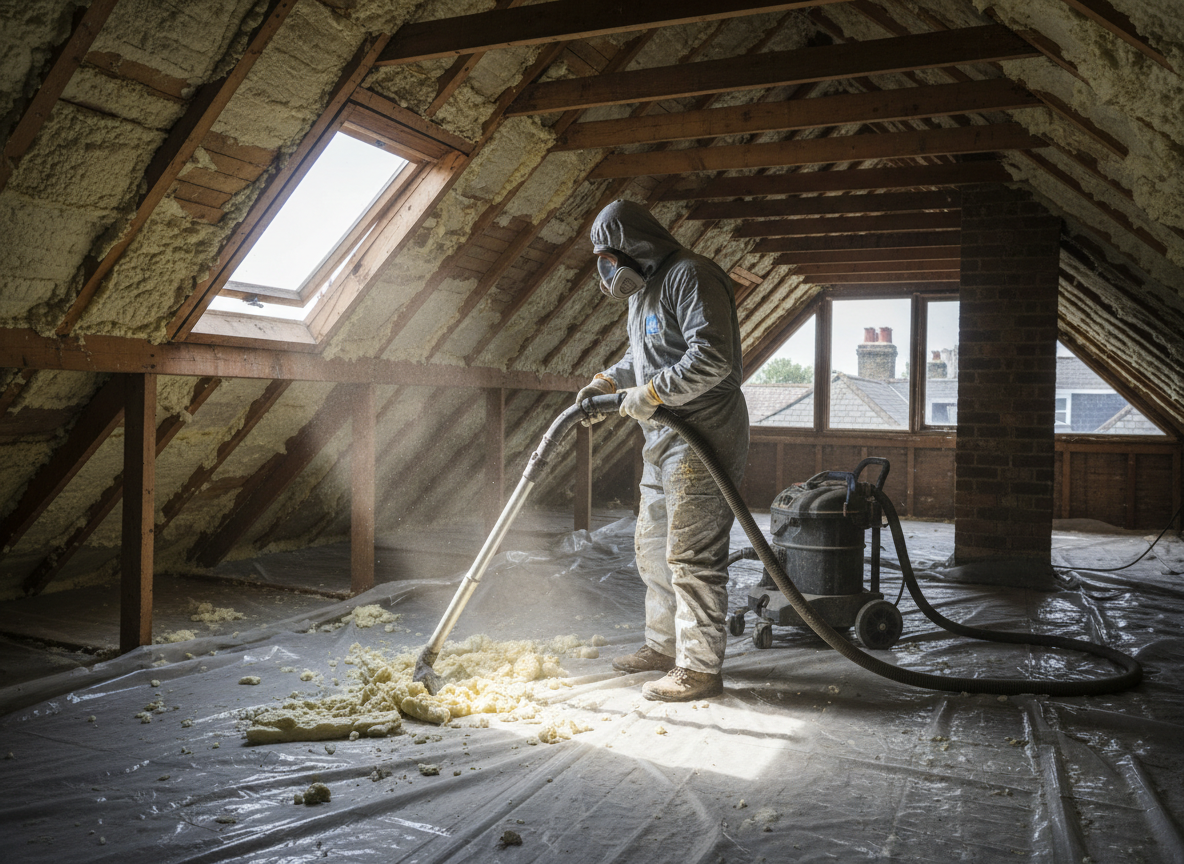
Attic spray foam removal in London often involves older terraces and semi-detached homes built between the late 1800s and 1950s in neighbourhoods such as South Woodford, Leytonstone and Wanstead. These properties frequently have narrow roof voids with limited access points, and the foam was applied directly to the underside of the roof deck. London’s frequent rainfall and high humidity mean the foam can trap condensation against timber, accelerating rot in rafters and battens that homeowners only notice when ceiling stains appear.
Removal requires careful separation of the foam from the roof structure without damaging original lath and plaster or modern plasterboard ceilings below. In post-war homes around E18 and nearby Waltham Forest streets, the foam is often thicker and more rigid due to the closed-cell products used in the 1990s and 2000s. Technicians must work in sections, using negative air machines to contain dust while cutting and scraping, then bagging material for licensed disposal. Ventilation upgrades are usually needed afterwards because original eaves and ridge vents were often blocked during the original installation.
Homeowners in Greater London should expect the job to reveal hidden issues such as corroded fixings or inadequate insulation in adjacent lofts. The clay-heavy soils and relatively high water table common across the London basin mean any moisture that was previously held by the foam can migrate once the barrier is gone, so temporary dehumidification is frequently required during and after removal.
Seasonal Timing Considerations
Work is often scheduled during drier months when attic temperatures allow safer handling of the material and better drying of any exposed timber. Winter jobs in London require extra containment because cold air can cause rapid condensation once the foam is stripped.
Technician insight
In London, the thing that catches most people out with Attic spray foam removal is how narrow Victorian loft hatches in terraces around South Woodford and Leytonstone combine with years of trapped moisture from the city’s damp winters, making the foam bond far tighter to the roof deck than owners expect.
Foam Removal in 1930s South Woodford Terrace
Homeowner noticed ceiling staining after heavy autumn rain. Inspection found closed-cell foam had blocked all eaves ventilation in the narrow loft. Foam was removed in sections, timber dried, and new soffit vents installed. Airflow returned and staining stopped within weeks.
How it works
- 1
Initial Attic Assessment
Technician inspects access, measures foam depth, checks for timber damage and tests ventilation paths in the specific property.
- 2
Containment Setup
Dust barriers and negative air filtration are installed to protect living spaces below, especially important in multi-storey London terraces.
- 3
Foam Extraction
Foam is cut, scraped and removed in controlled sections, with material double-bagged for proper disposal.
- 4
Post-Removal Inspection and Ventilation
Exposed roof deck and timbers are checked, temporary drying measures applied, and recommendations made for permanent ventilation improvements.
Pricing
Cost depends on attic size, foam thickness and access difficulty; upfront quotes provided after inspection.