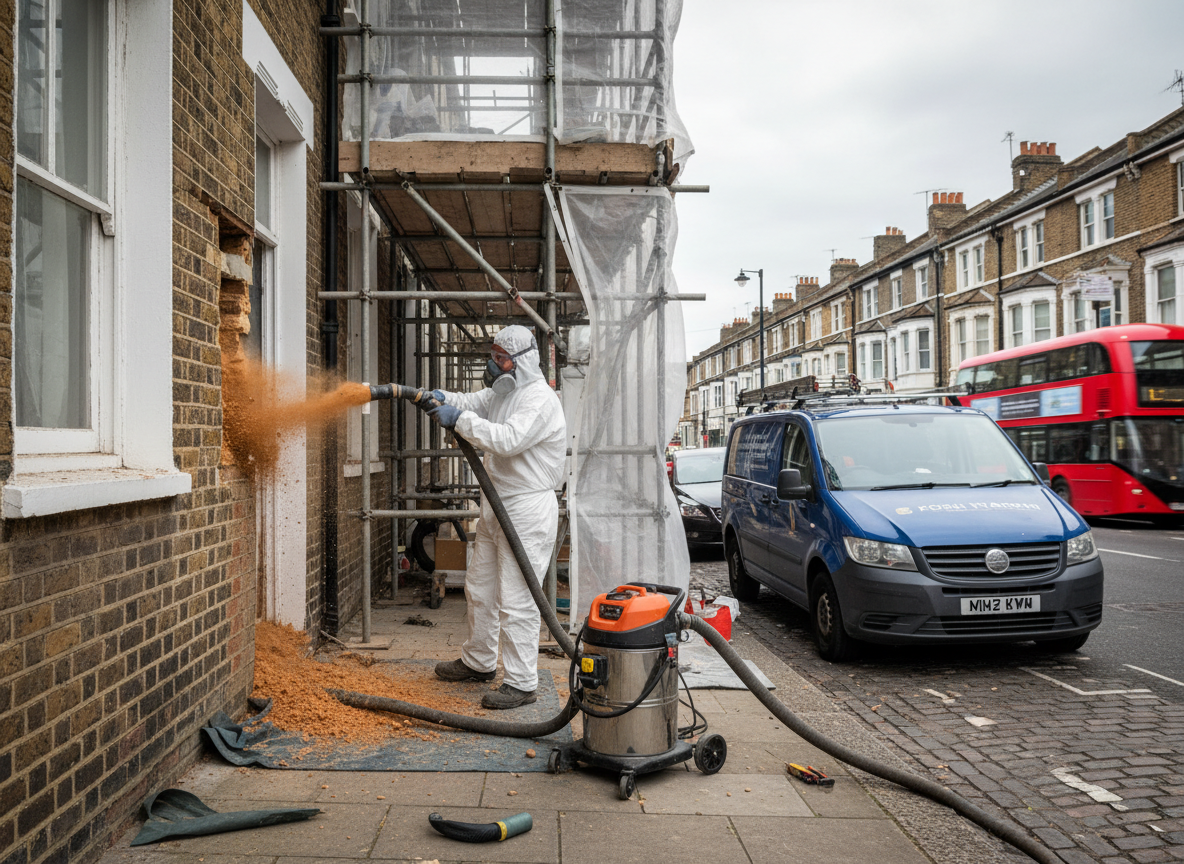
London's Victorian and Edwardian terraces, common in areas such as South Woodford and Wanstead, often have narrow cavities that were filled with spray foam in the 1990s and early 2000s. Over time the foam absorbs moisture from the city's frequent rainfall and mild winters, trapping damp against brickwork and causing timber decay. Removal requires cutting access points without damaging original masonry or lath and plaster internals, then extracting the material in sections before clearing ventilation paths.
Homeowners in E18 and nearby postcodes frequently discover foam issues during loft conversions or when selling, because lenders now flag injected cavities. The work must account for party walls shared with adjacent properties and the risk of disturbing asbestos-containing materials in older ceilings. Proper extraction restores the cavity's ability to breathe, reducing condensation on internal walls that previously had no airflow.
Weather patterns in Greater London mean jobs are often scheduled around dry spells to avoid water ingress during the process. Soil conditions around older foundations can also affect external access, especially where gardens slope toward the house. Each property needs a tailored sequence of inspection, material testing and phased removal to prevent structural movement in lightweight timber frames typical of the region.
Technician insight
In London, the thing that catches most people out with Cavity wall spray foam removal is how the foam has bonded to the original lime mortar in Edwardian cavities around South Woodford; once you start pulling it, sections of pointing come with it and you have to repoint from inside before the job is finished.
South Woodford Terrace Extraction
Homeowner in E18 reported persistent damp on a rear bedroom wall after a loft conversion. Inspection showed closed-cell foam had absorbed rainwater through failed mortar joints. We cut limited access holes, extracted the saturated material in layers, cleared the cavity and restored ventilation. The wall dried out over the following weeks with no further staining.
How it works
- 1
Site Inspection
Assess cavity condition, foam type and access points through existing vents or drilled test holes at the E18 property.
- 2
Material Testing
Check foam adhesion and moisture levels to determine safe extraction method without damaging brick or plaster.
- 3
Controlled Extraction
Remove foam in sections using specialist tools, clearing debris while protecting internal finishes and party walls.
- 4
Cavity Clearance and Ventilation
Flush remaining residue, restore airflow and confirm no bridging remains between inner and outer leaves.
Pricing
Upfront quotes provided after inspection; final cost depends on cavity depth, access and volume of material.