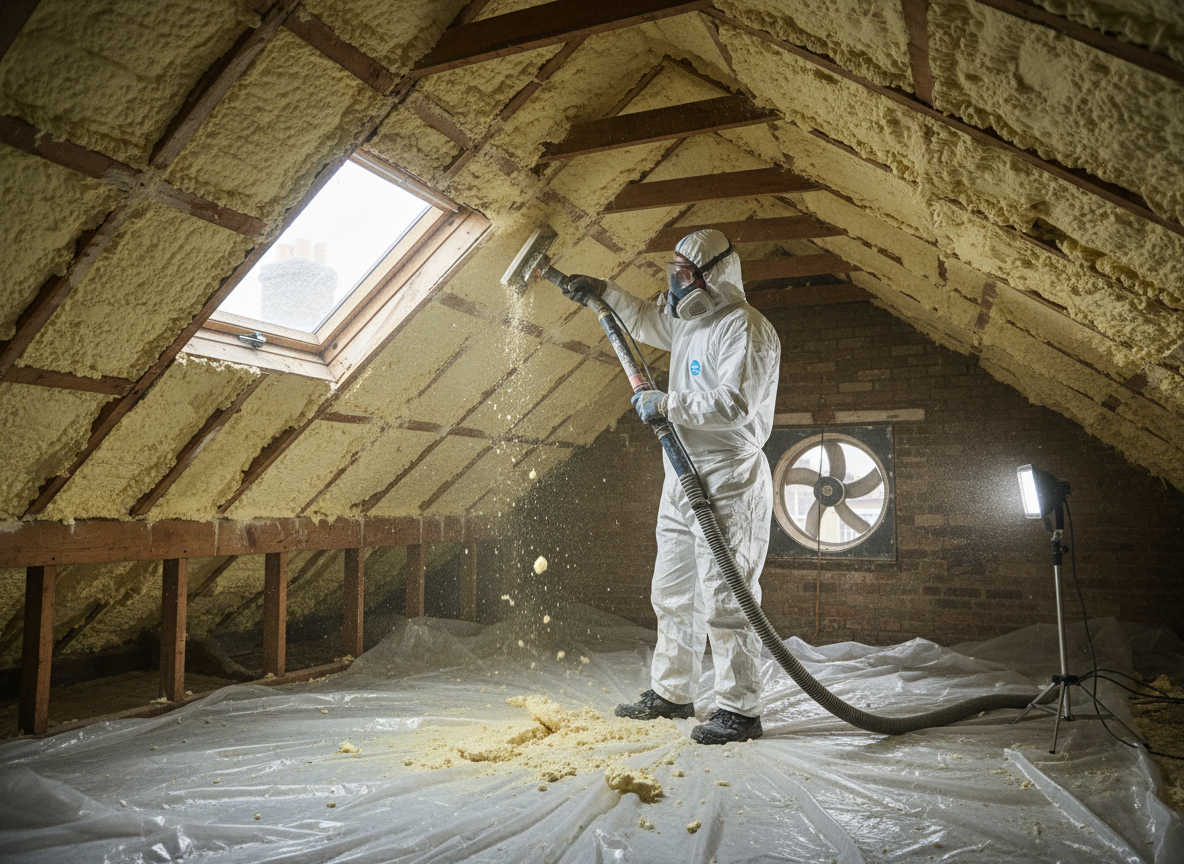
Closed cell spray foam bonds tightly to timber joists, plaster and brick in many London terraces built before 1930. Removal requires careful mechanical separation followed by solvent cleaning to avoid damaging lath and plaster ceilings common in South Woodford and Wanstead properties. Winter rainfall often pushes moisture behind the foam, creating hidden mould that must be treated before any new insulation is considered.
Our teams work from 139 George Lane and respond across the London area within hours. We cut the foam into manageable sections using oscillating tools, then bag and remove it to prevent dust settling into floor voids below. In Edwardian semis around Leytonstone the foam frequently covers original cornices, so we document and protect these features before starting.
After extraction we inspect for rot in floor joists and treat any affected timber with borate solutions suitable for the damp London clay soils. Ventilation gaps must be restored to meet current building regulations on roof spaces, especially in properties near the Lea Valley where condensation risk stays high year-round.
Handling Hidden Moisture
London's frequent rain and older solid-wall construction mean closed cell foam often seals in damp. We always test substrate moisture levels before finishing and advise on breathable alternatives where needed.
Technician insight
In London the thing that catches most people out with closed cell spray foam removal is how quickly moisture builds behind it in our Victorian terraces once the original roof vents get blocked, especially after a wet winter on clay soil.
Hackney Terrace Moisture Discovery
Homeowner noticed musty smell in top-floor bedroom of a 1890s terrace. We found closed cell foam sealing the entire roof void with standing water on the joists. After sectioning and removing the foam we treated the timber and reopened the eaves vents, drying the space fully before handover.
How it works
- 1
Site Assessment
Inspect foam depth, substrate condition and any signs of trapped moisture in roof or wall voids.
- 2
Containment Setup
Protect floors, electrics and original features before cutting begins.
- 3
Foam Extraction
Section and remove closed cell material using low-vibration tools to limit dust.
- 4
Substrate Treatment
Clean residues, treat mould and repair any timber affected by previous damp.
- 5
Final Clearance
Remove all waste, restore ventilation and leave the space ready for follow-on work.
Pricing
Pricing depends on access, foam thickness and extent of moisture damage; site visit required for accurate scope.