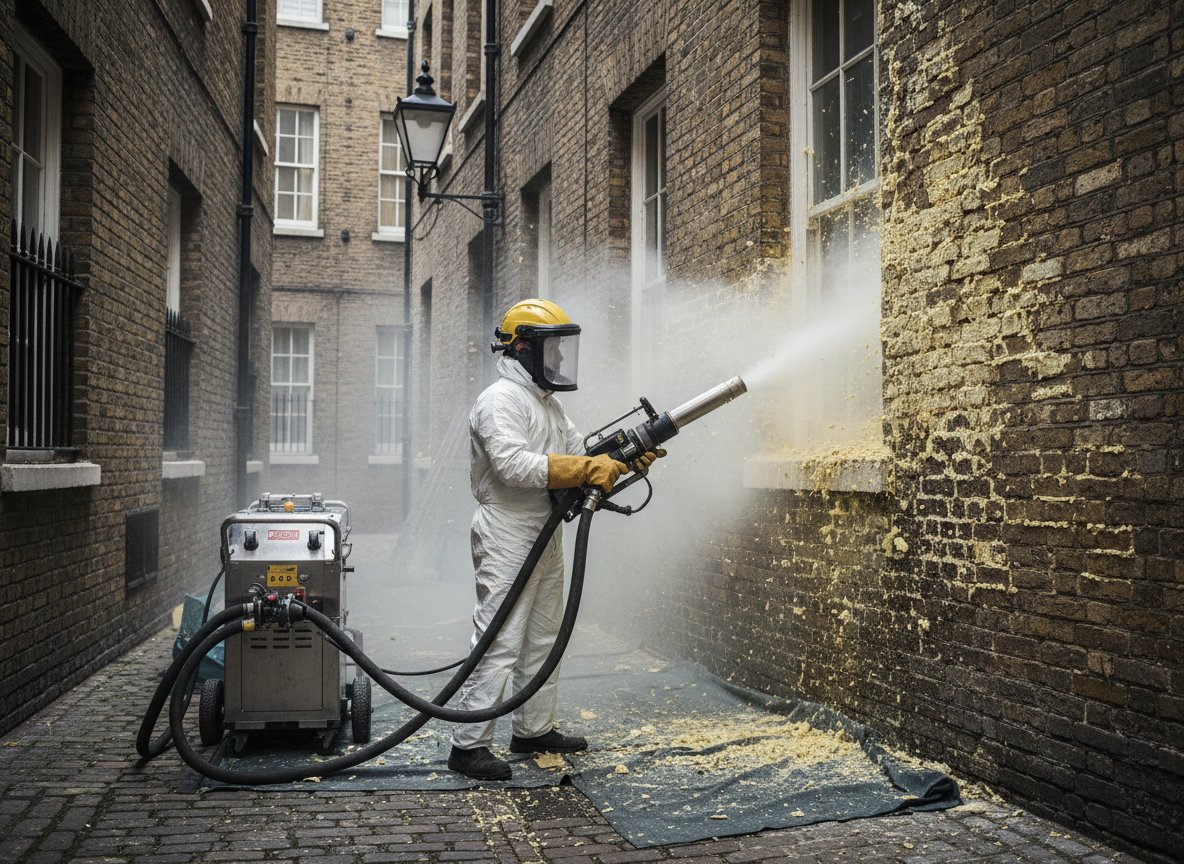
Dry ice blasting removes spray foam insulation without damaging underlying timber or brick in London properties. The process uses solid CO2 pellets accelerated at high velocity to lift foam from joists and rafters while leaving surfaces clean. In Victorian and Edwardian terraces common across Hackney, Islington and Southwark, irregular roof voids and hidden cavities require careful mapping before blasting begins.
London's frequent rainfall and high humidity mean residual moisture often sits behind foam layers. Blasting must account for this or trapped water can lead to rot once the insulation is gone. Technicians check for original lath and plaster ceilings that can crack under vibration and adjust pressure accordingly on every job.
Edge cases include listed buildings where consent may be needed before any disturbance, and post-war flats with thin concrete decks where rebounding pellets must be contained. Homeowners sometimes attempt DIY solvent removal first, which leaves a sticky residue that makes blasting less effective and extends the job.
Handling Hidden Cavities
Before blasting starts, inspection with borescopes locates foam that has migrated behind stud walls or into eaves. This prevents incomplete removal that later causes condensation issues in the mild but wet London winters.
Post-Removal Checks
After the foam is gone, surfaces are wiped and ventilation restored. Any timber showing signs of historic damp receives a note for the owner to monitor, especially in properties near the Thames where groundwater levels fluctuate.
Technician insight
In London, the thing that catches most people out with dry ice blasting spray foam removal is the way Edwardian terraces in areas like Walthamstow trap foam behind original lathe in ways that only show up once you start blasting, turning a half-day job into a full one when the rain has already soaked the cavity.
Ealing Loft Foam Extraction
Homeowner in a 1930s semi noticed persistent damp smells after foam was installed years earlier. Inspection revealed foam had filled the eaves and blocked ventilation. Dry ice blasting cleared the foam without disturbing the original rafters. Once debris was removed, airflow returned and the musty odour disappeared within days.
How it works
- 1
Site Assessment
Walk the loft and accessible voids to map foam extent and note any original construction details in the London property.
- 2
Protection Setup
Cover floors, electrics and vents with sheeting to contain spent pellets and foam debris during blasting.
- 3
Dry Ice Blasting
Apply pellets at controlled pressure, working section by section to lift foam from timber and masonry without surface damage.
- 4
Debris Removal and Clean
Vacuum all residue, inspect for remaining foam pockets and ventilate the space before handover.
Pricing
Cost depends on loft size, foam depth and access difficulty in older London homes; quotes provided after inspection.