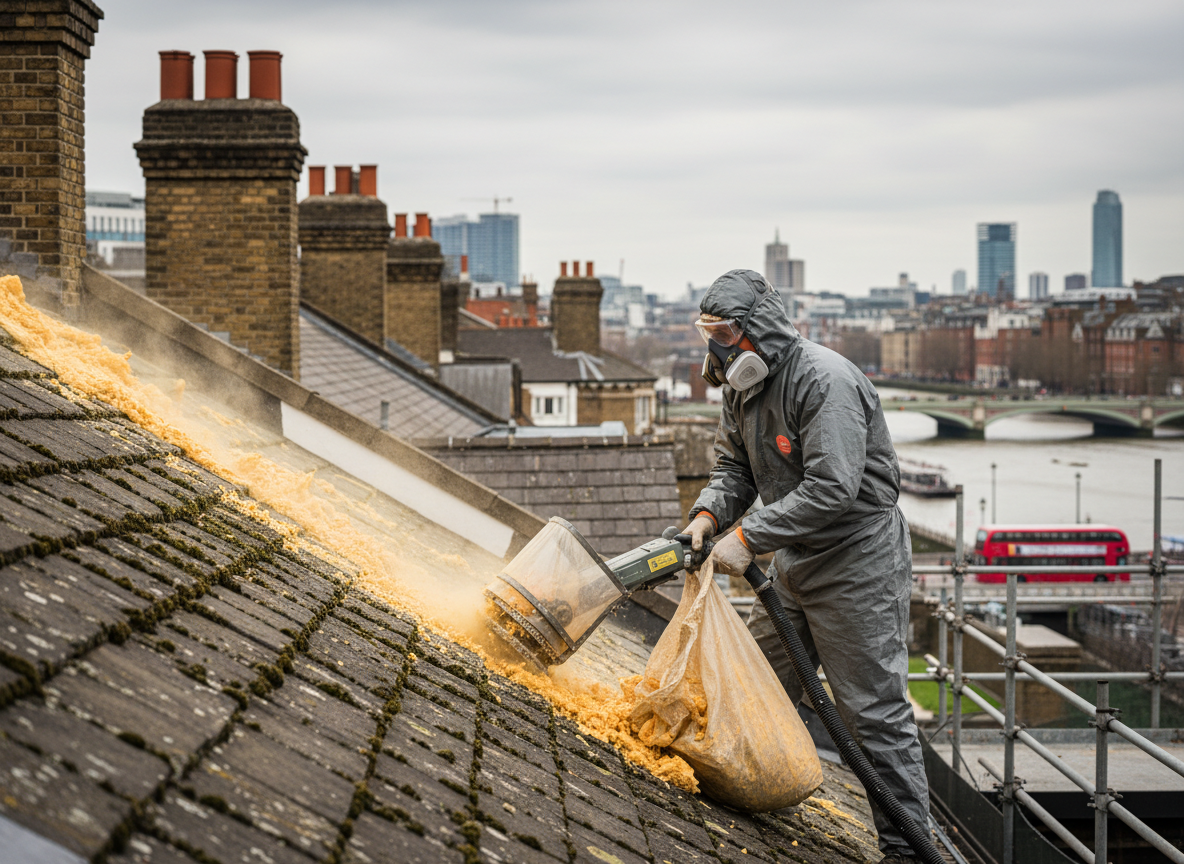
London's Victorian terraces and 1930s semis often received spray foam in the loft during the 2000s energy-efficiency push. The foam frequently bridges the eaves and blocks the airflow that slate and tile roofs rely on, especially during the city's frequent winter rain and mild but humid summers. Once moisture builds behind the closed cell layer, rafters and felt can start to degrade without any obvious sign from inside the house until a musty smell appears.
Removal work here requires careful cutting around original timber trusses and chimney stacks that many modern insulation teams overlook. In areas like Hackney, Islington and Waltham Forest the narrow roof voids mean sections of foam must be removed in small pieces to avoid disturbing asbestos-containing flue pipes or fragile lath and plaster ceilings below. After stripping, the roof void needs temporary ventilation installed before any new insulation goes back, because London's clay soil and high water table keep humidity levels elevated year-round.
Homeowners sometimes attempt DIY scraping, which leaves residue that prevents new insulation from bonding and can void any remaining roof warranty. Professional teams use low-pressure scraping tools and HEPA extraction to keep dust out of living spaces, then check for rot on the underside of the tiles before handing the property back. This sequence prevents repeat call-outs that are common when the original foam job ignored the capital's prevailing wind-driven rain patterns.
Technician insight
In London, the thing that catches most people out with roof spray foam removal is how quickly the foam traps condensation against the rafters in Victorian terraces once the eaves are sealed; our wet winters and clay soil keep humidity high, so rot often shows up only after the foam comes off.
Hackney Victorian Terrace Loft
Homeowner reported a persistent musty smell in the upstairs rooms. Inspection showed closed-cell foam had bridged the eaves and blocked airflow in the 1890s roof. We removed the foam in sections, cleared debris and reopened ventilation paths. The rafters dried out and the smell disappeared within weeks.
How it works
- 1
Site Survey
Assess roof access, foam thickness and any signs of trapped moisture in the specific London property.
- 2
Safe Removal
Cut and extract foam in controlled sections while protecting original timbers and maintaining ventilation paths.
- 3
Ventilation Restoration
Reopen eaves and install temporary vents to match the building's age and roof type before handover.
- 4
Final Inspection
Check rafters and felt for damage, document condition and advise on next steps for the loft space.
Pricing
Cost depends on roof size, foam depth and access difficulty in London properties; site visit provides accurate guidance.