2026-10-23 ·
Step-by-Step Considerations for Removing Spray Foam Insulation
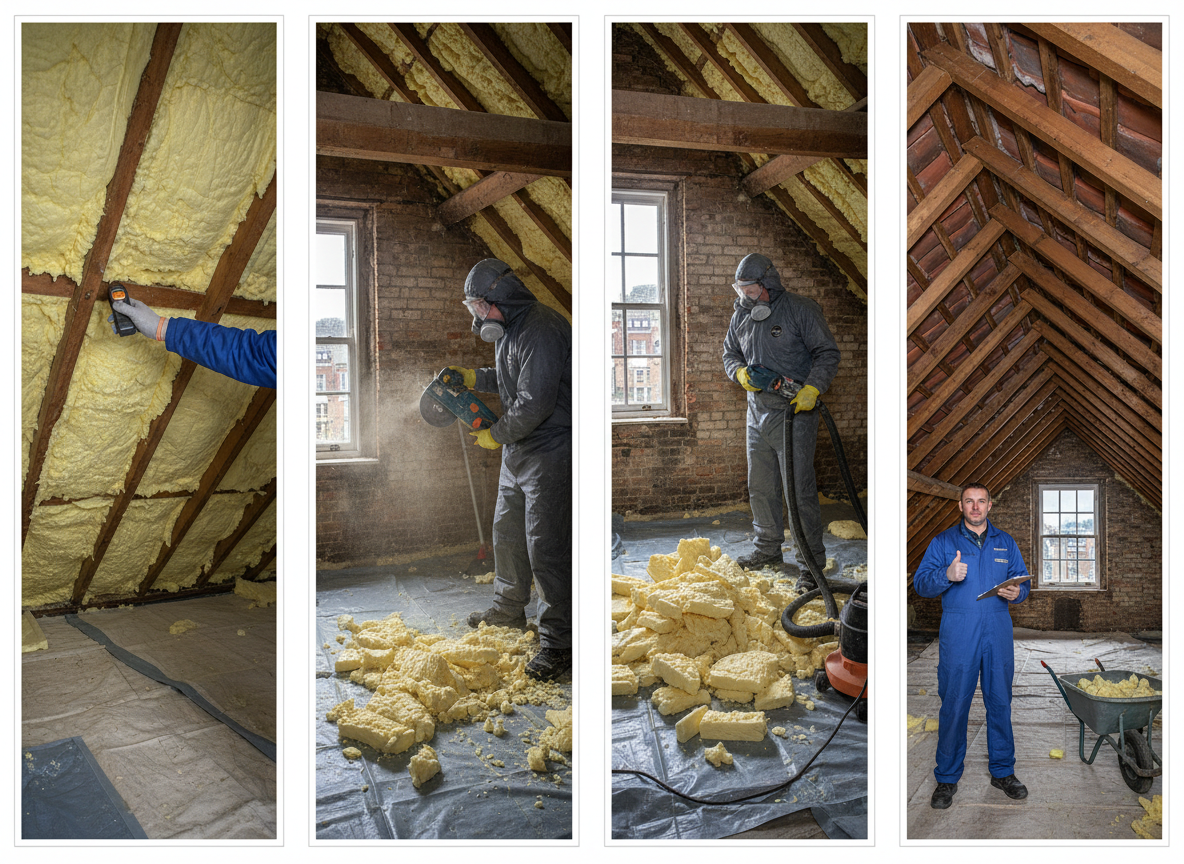
Removing spray foam insulation from London homes starts with a full inspection of the building's structure and condition before any tools are used. Victorian terraces in areas such as South Woodford and Wanstead Park frequently have timber joists and lath ceilings that can be damaged if the foam is pulled away without first checking load paths and hidden damp. The process usually takes three to seven days depending on access and foam thickness, and homeowners should expect dust control measures and temporary ventilation changes throughout.
Initial Property Assessment
Begin by documenting every room where foam exists, noting whether it is open cell or closed cell and how it was applied to joists or rafters. In London stock built before 1930 the original roof voids often lack modern ventilation, so trapped moisture behind the foam can lead to rot that must be addressed first. Measure the depth of the foam in several locations because thicker layers require different removal pressures and longer drying times after stripping. Check for electrical cables and pipework embedded in the foam, as these are common in E18 conversions and can be cut during mechanical removal. Record any signs of water staining on ceilings below, since this indicates the foam may have been covering an ongoing leak rather than solving one. A written report at this stage helps decide whether the job needs dry ice blasting or mechanical scraping.
Safety and Access Planning
Set up dust barriers and negative air machines before disturbing any foam, especially in occupied terraces where neighbours share party walls. London weather often brings high humidity from October through March, so plan extraction fans to run continuously and prevent moisture re-entering stripped timber. Wear full PPE including respirators rated for isocyanates, as the cured foam releases particles when broken. Confirm that scaffolding or access towers can be placed without obstructing narrow South Woodford pavements or conservation-area restrictions. Keep a fire extinguisher rated for chemical fires on site because some removal solvents are flammable. Schedule the work during drier spells when possible so that exposed roof timbers can be inspected and treated the same day.
Removal Technique Selection
Choose the method based on substrate and foam type rather than speed. Dry ice blasting spray foam removal works well on closed cell foam bonded to brick or concrete in interwar homes around Leyton and Highams Park because it avoids gouging the surface. Mechanical scraping with plastic blades is often required in loft spaces where rafters are narrow and wiring runs close to the surface. For cavity wall applications in Edwardian terraces, sections may need to be removed in stages to avoid collapsing internal plaster. After the bulk is gone, residual foam in crevices is treated with a citrus-based solvent that breaks the bond without leaving oily residue. Always test a small area first on painted surfaces common in Wanstead Park properties.
Post-Removal Inspection and Repairs
Once the foam is cleared, examine every timber for rot and treat affected joists before re-insulating with an alternative material. Spray foam insulation removal often reveals original ventilation gaps that were blocked, so these should be restored to meet current building standards in Greater London. Replace any damaged lath and plaster ceilings promptly to prevent further cracking in older homes. Document the final condition with photographs for mortgage lender records, as many lenders now require proof that foam has been fully removed from roof voids. Allow at least two weeks of monitoring for any recurring damp before closing up the space.
Timing and Ongoing Maintenance
Schedule the project when external temperatures stay above 8 °C for several days so that any solvent residues evaporate properly. Best time of year for spray foam removal in London tends to be late spring or early autumn when rainfall is lower and daylight hours allow longer working days. After completion, inspect the roof void twice a year for new leaks, particularly after heavy London storms. Keep gutters clear on terraces in Gants Hill and Barkingside to reduce water running behind fascia boards where foam was once attached. This routine prevents the need for repeated removal work in the future.